
The Billion-Dollar Business at Your Fingertips
The rise of press-on nails almost feels inevitable — because getting a full manicure at a salon can be incredibly time-consuming.
And that’s before we even get into all the preparation.
First comes trimming the natural nails, removing dead skin, applying softener, buffing the nail surface, attaching extensions, cutting them to length, shaping the edges, and applying base gel.
Then comes the building process: more buffing, applying color, curing under the lamp, adding another coat, curing again…
Think it’s finished?
Not quite.
Beauty takes time.
Next comes the detailed nail art — finger by finger — followed by pearls, embellishments, top coat, final shaping and polishing, and finally a layer of nourishing oil.
By the time the entire process is finished, a salon manicure can easily take 4 hours — and in some cases, as long as 8 hours.
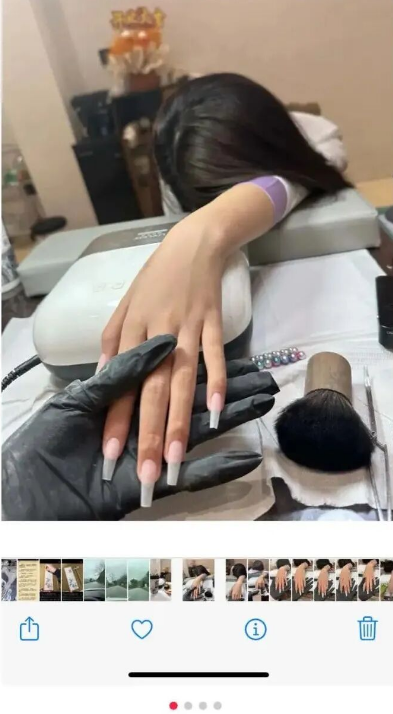
Why Press-On Nails Were Destined to Become Popular
For many people, getting a manicure at a salon is not just a beauty treatment — it is a serious time commitment.
A full set can involve trimming the natural nails, cleaning the cuticles, softening the skin, buffing the nail surface, applying extensions, shaping the length and edges, adding base gel, building structure, applying color, curing under a lamp, and repeating the process several times.
And that is only the beginning.
Once the basic structure is complete, the detailed decoration starts. Nail artists may hand-paint patterns finger by finger, add pearls, crystals, charms or other embellishments, seal everything with a top coat, reshape the edges, and finish with protective oil.
By the time the entire process is complete, a salon manicure can easily take four to eight hours.
There are even stories of boyfriends waiting for their girlfriends to finish a manicure for more than ten hours. By the time they finally stand up, completely numb from sitting for so long, they may start wondering whether they were waiting for a manicure — or proving the strength of their relationship.
It is easy to understand why consumers eventually started looking for a faster alternative.
Press-On Nails: Beauty Without the Long Wait
That is where press-on nails come in.
Instead of creating the entire design directly on the customer's hands, manufacturers prepare the nail tips in advance.
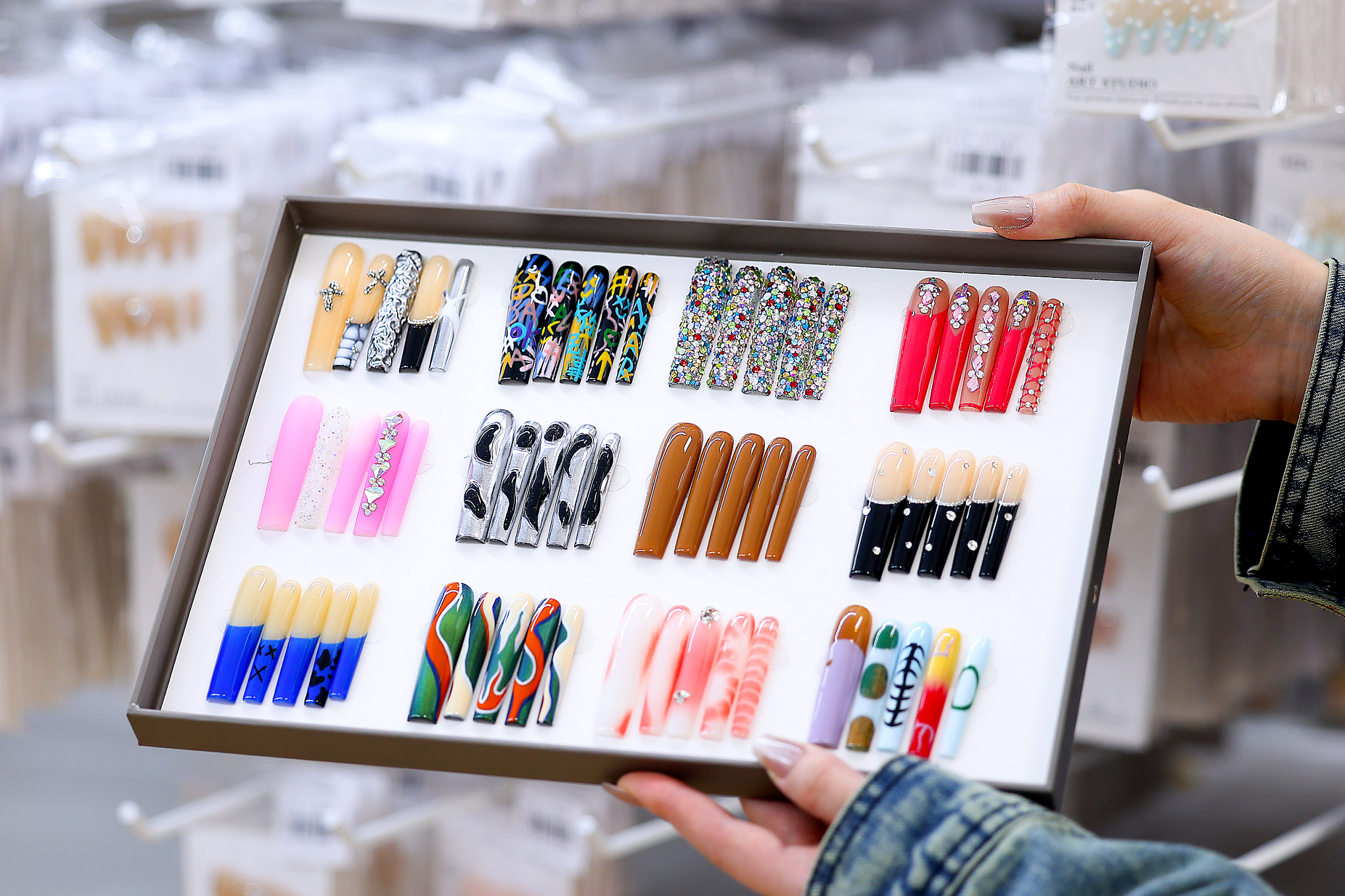
The shape, color, pattern and decorative elements can all be completed through machine production, handcrafting, or a combination of both. The finished nail sets are then sold directly to consumers, who can apply them at home.
This dramatically reduces the amount of time required compared with a traditional salon manicure.
For consumers, the appeal is simple:
less time, more convenience, and more freedom to change styles whenever they want.
From Simple Colors to Creative Nail Art
Early press-on nails were relatively simple.
Many designs focused on solid colors and natural finishes, giving the appearance of freshly applied nail polish.
But the category quickly evolved.
Today, press-on nails can feature almost anything imaginable — from French tips, cat-eye effects and ombré finishes to detailed 2D artwork, sculpted 3D decorations, insects, animals, flowers, pearls, metallic elements, miniature objects and highly experimental designs.
Human creativity has pushed the category far beyond basic nail decoration.
In many ways, the nail tip has become a miniature canvas.
Give a designer a single nail, and they can transform it into almost anything.
More Than a Beauty Product
The rise of press-on nails is not only about convenience.
It also reflects a broader change in the beauty industry.
Consumers increasingly want products that are:
faster, more personalized, easier to use, visually distinctive, and suitable for social media.
Press-on nails fit all of these trends.
They allow consumers to switch styles for work, parties, weddings, holidays or everyday wear without committing to a long salon appointment.
At the same time, they give beauty brands enormous room for product development, customization and private-label opportunities.
What started as a convenient alternative to salon manicures has gradually become a fast-growing beauty category of its own.
And with new materials, manufacturing technologies and creative designs continuing to emerge, the possibilities for press-on nails are still expanding.

From Beauty Accessory to Cultural Phenomenon
Press-on nails are also getting longer and more dramatic.
What once started with relatively modest lengths has evolved into extra-long designs that can extend far beyond the fingertip.
Some creators have even turned these exaggerated nails into part of their online identity. One content creator became known for using long press-on nails to create distinctive tapping and clicking sounds, jokingly inspiring what could be called a new “nail language.”
Of course, not everyone understands the appeal.
Some people love bold, unconventional nail designs, while others wonder why anyone would want nails that long in the first place.
But fashion has always had its playful side. Today’s extreme nail trends may seem unusual, yet people have always found creative ways to turn everyday objects into forms of self-expression.
What cannot be ignored, however, is the business behind it.
These tiny nail tips are becoming part of a much bigger beauty economy — a true business at your fingertips.
As demand grows, the press-on nail industry is creating opportunities across design, manufacturing, branding, wholesale, retail and e-commerce.
For many businesses, what looks like a small beauty accessory has become a surprisingly powerful commercial category.
02
For many consumers, saving money is one of the biggest reasons for choosing press-on nails.
A professional salon manicure can be expensive, especially when booked with an experienced or high-end nail technician. Popular nail artists often require appointments in advance, and once service fees, nail art, extensions, and other add-ons are included, a single manicure can easily cost several hundred RMB — and premium sets may cost more than RMB 1,000.
Press-on nails, by comparison, are much more affordable.
Consumers can often buy a stylish, ready-to-wear set for just a few dozen RMB, while some basic sets cost only a few RMB.
This large price difference makes press-on nails especially attractive to consumers who want to change styles frequently without paying salon prices every time.
Professional Custom Press-On Nail Service
Talk to Queen nail Team,Fill out your Information
Your Email*
Phone/WhatsApp/skype*
Your Name*
Company Name
Content*
Annual Sales Revenue*
- I'm a startup
- <100.000 USD
- 100.000 USD-1M USD
- >1M USD
First Order Quantity*
- 100+pcs
- 300+ pcs
- 500+ pcs
- 1000+pcs

Founded in 2015, QUEEN NAlL is acustom press-on nail manufacturer,specializing in high-quality press-onnails and related products.



